


Borrow &
Lend
Integrate borrow and lending markets, and build leveraged positions with Multiply.
How It Works
A high-level view of the Borrow model.

Deposit
User supplies collateral tokens. An obligation is created to track their position and enable borrowing capacity.

Borrow
User borrows assets against collateral. LTV ratio determines borrow limit. Interest accrues on borrowed amount.

Repay
User repays borrowed assets plus interest. Reduces debt, improves health factor, and unlocks collateral for withdrawal.
Borrow Integration Model
Built for seamless integration. Borrow centers on three core layers of composability.
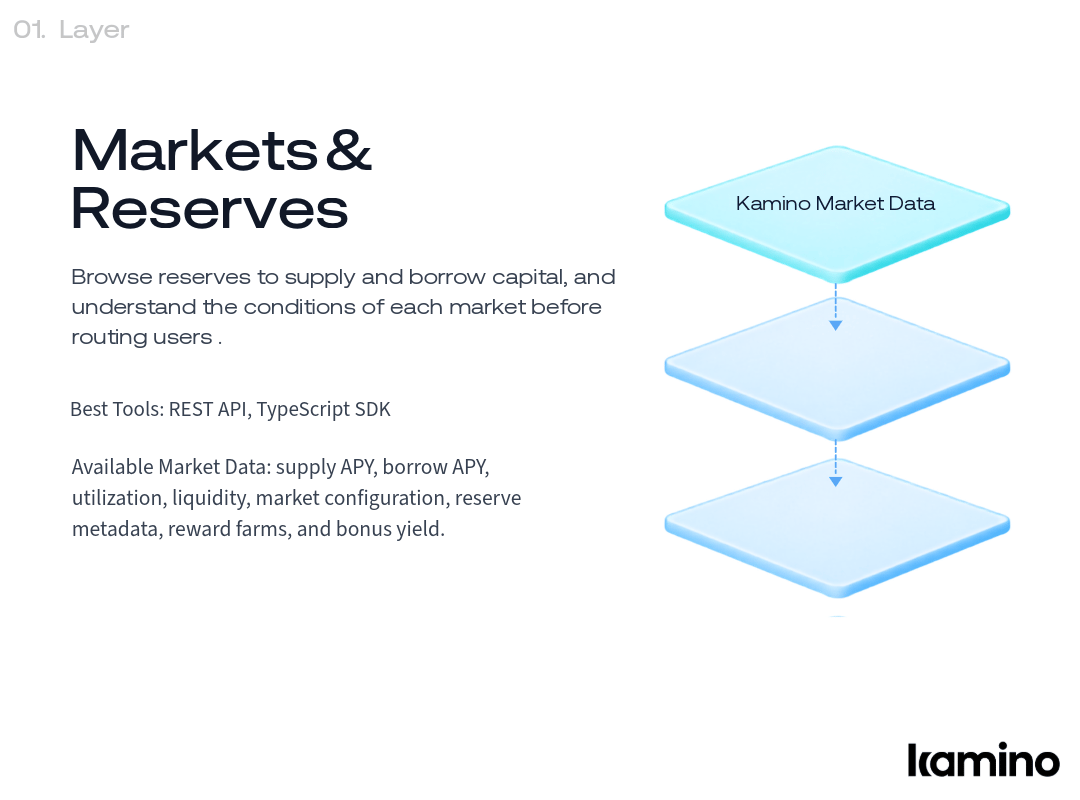
Markets & Reserves
Browse reserves to supply and borrow capital, and understand the conditions of each market before routing users.
Best Tools: REST API, TypeScript SDK
Available Market Data: supply APY, borrow APY, utilization, liquidity, market configuration, reserve metadata, reward farms, and bonus yield.
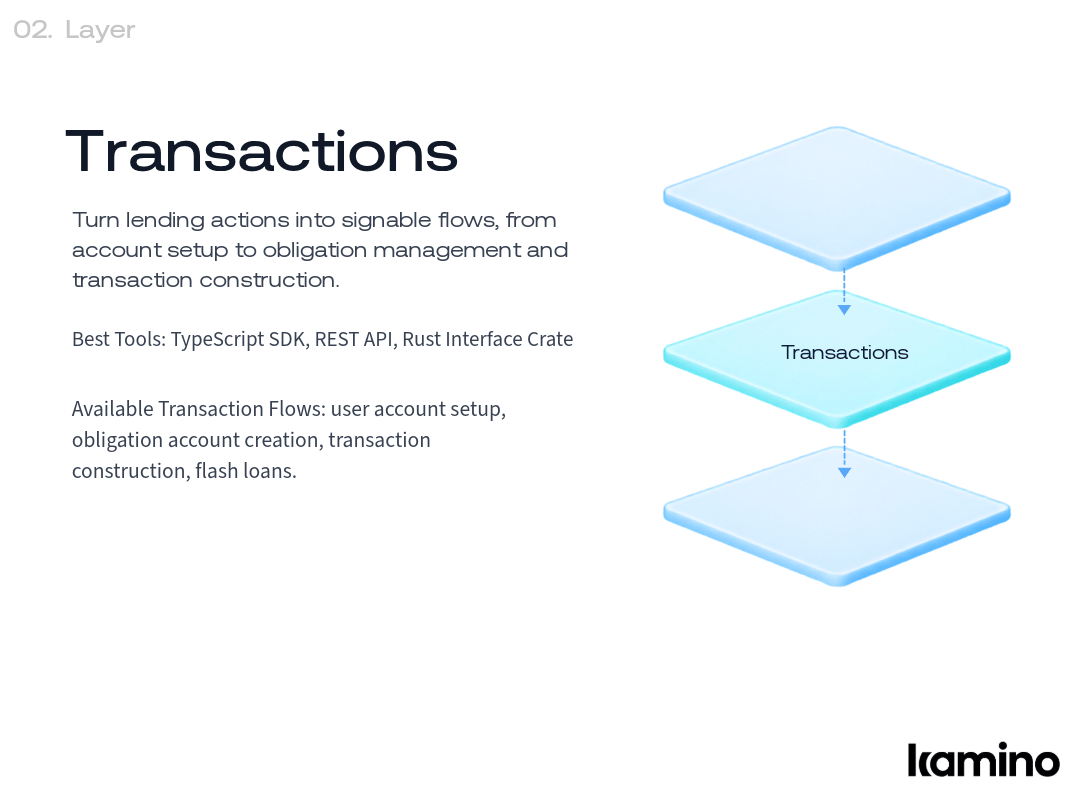
Transactions
Turn lending actions into signable flows, from account setup to obligation management and transaction construction.
Best Tools: TypeScript SDK, REST API, Rust Interface Crate
Available Transaction Flows: user account setup, obligation account creation, transaction construction, flash loans.
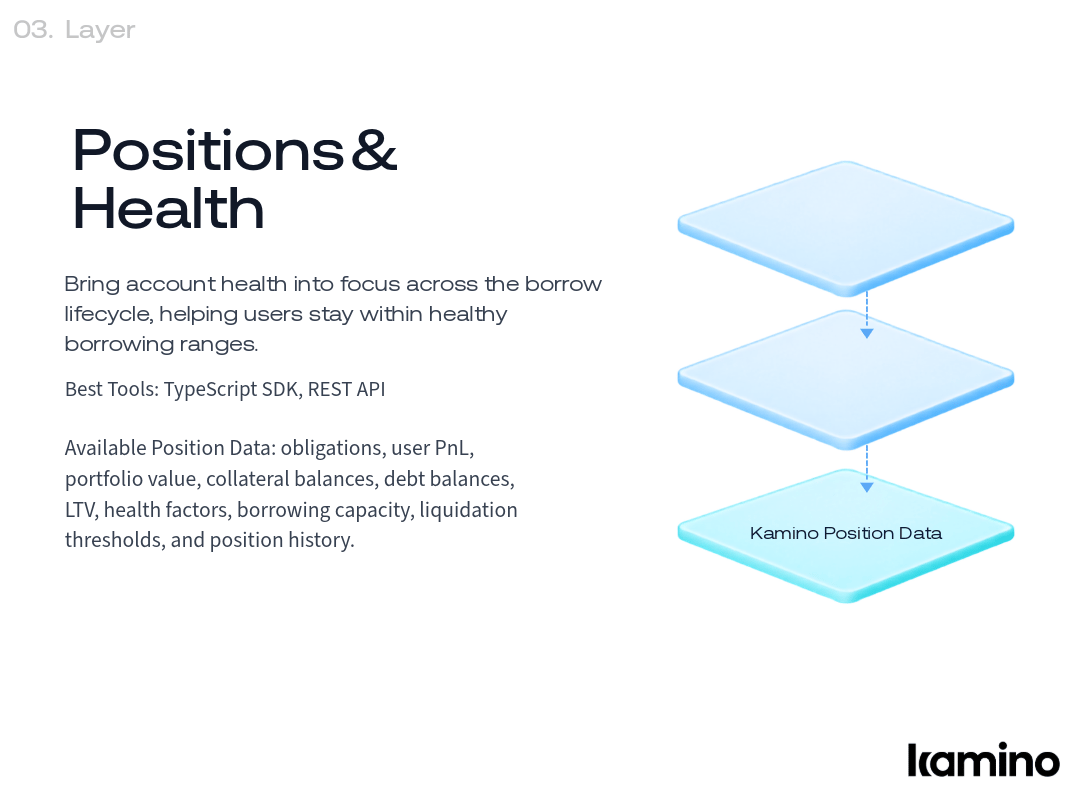
Positions & Health
Bring account health into focus across the borrow lifecycle, helping users stay within healthy borrowing ranges.
Best Tools: TypeScript SDK, REST API
Available Position Data: obligations, user PnL, portfolio value, collateral balances, debt balances, LTV, health factors, borrowing capacity, liquidation thresholds, and position history.
Start Building
Explore guides, tutorials, and API references.
SDK Tutorials
Step-by-step guides for building with Kamino lending markets.
API Recipes
Quick code examples for common lending operations via API.
Rust Tutorials
Deposit, borrow, repay, and withdraw using the klend-interface Rust crate.
Multiply Integration
Build leveraged positions with flash loans and swaps.